Advanced Digital Construction Management Systems
Advanced Digital Construction Management Systems (ADCMS)
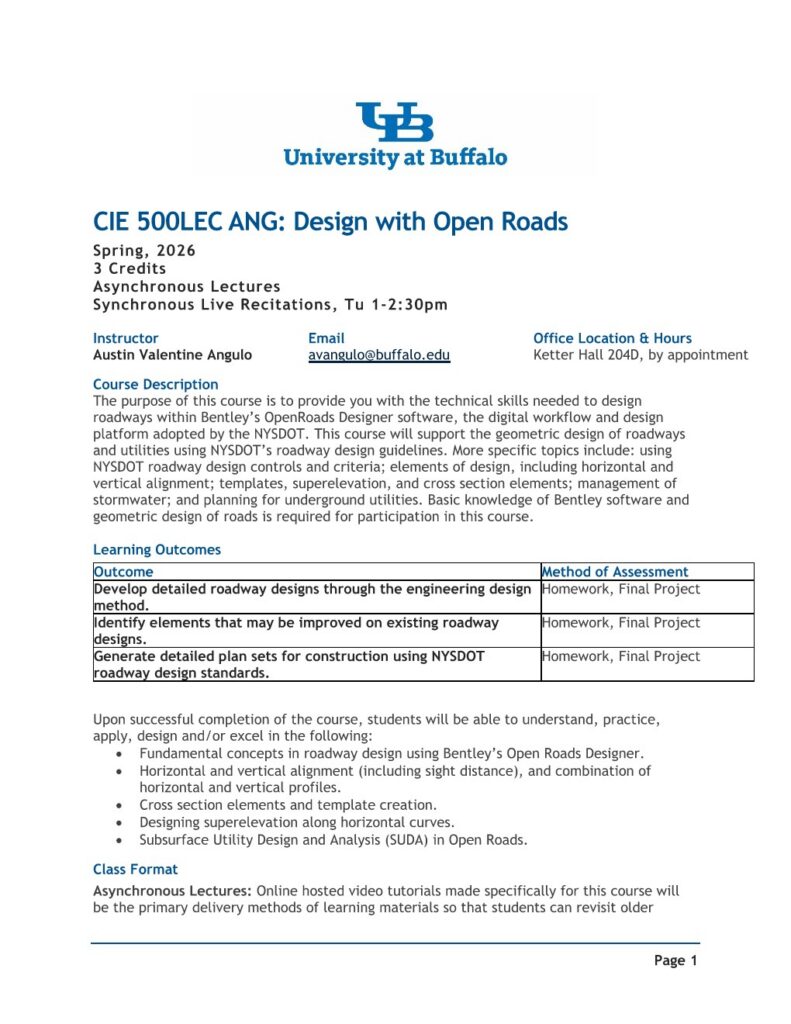
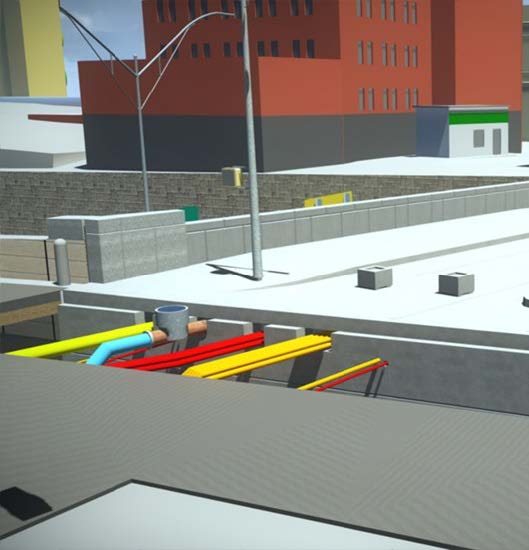
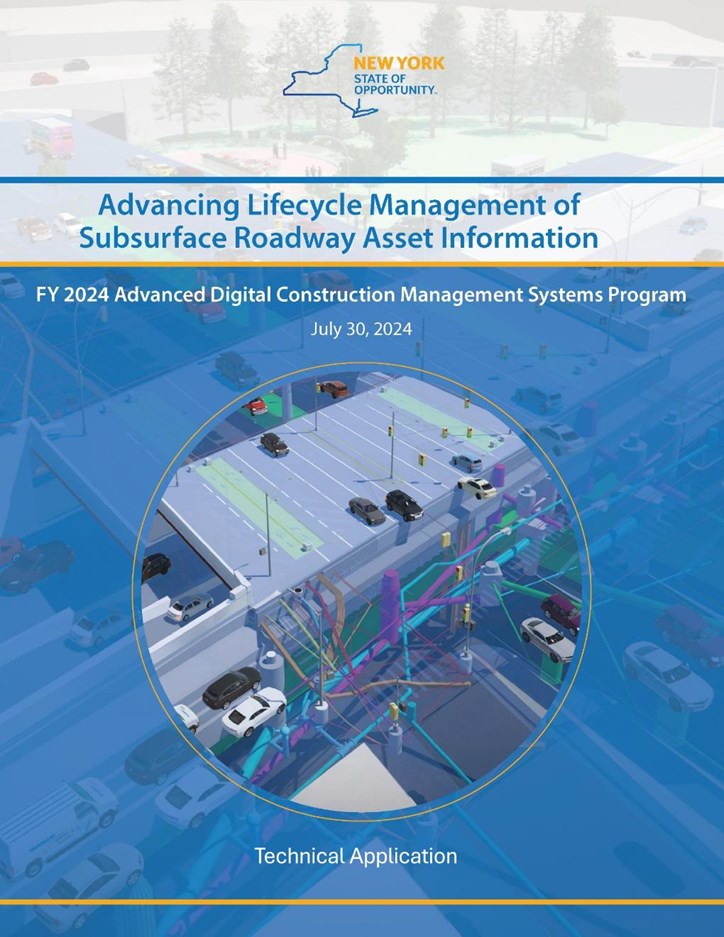
In October 2024, NYSDOT was awarded a $3.4M grant from FHWA towards implementing our submitted application. This will allow NYSDOT to leverage and further build upon our Digital Delivery efforts and implement a method to extract subsurface roadway asset data from design models to support asset management through a digital as-built exchange. Additionally, NYSDOT has partnered with the State University at Buffalo do development two graduate level courses focused on developing the workforce in computer aided design software that we use to develop our capital projects.
ADCMS Overview
ADCMS are digital technologies and processes for management of construction and engineering activities, including systems for infrastructure planning and coordination, design, construction, maintenance, modernization and management, and asset management including hardware, mobile devices, software, “internet of things” (IoT), and personnel. It also includes the development and support of systems to enhance and share data across an asset’s lifecycle and between organizational silos, also referred to as maximizing interoperability.
The purpose of ADCMS is to promote, implement, deploy, demonstrate, showcase, support, and document the application of advanced digital construction management systems, practices, performance, and benefits.
Program Goals
- Accelerated State adoption of advanced digital construction management systems applied throughout the construction lifecycle (including through the design and engineering, construction, and operations phases) that maximize interoperability with other systems, products, tools, or applications; boost productivity; manage complexity; reduce project delays and cost overruns; and enhance safety and quality.
- More timely and productive information – sharing among stakeholders through reduced reliance on paper to manage construction processes and deliverables such as blueprints, design drawings, procurement and supply chain orders, equipment logs, daily progress reports, and punch lists.
- Deployment of digital management systems that enable and leverage the use of digital technologies on construction sites by contractors, such as state-of-the-art automated and connected machinery and optimized routing software that allows construction workers to perform tasks faster, safer, more accurately, and with minimal supervision.
- The development and deployment of best practices for use in digital construction management.
- Increased technology adoption and deployment by States and units of local government that enables project sponsors to integrate the adoption of digital management systems and technologies in contracts and to weigh the cost of digitization and technology in setting project budgets.
- Technology training and workforce development to build the capabilities of project managers and sponsors that enables States and units of local government to better manage projects using advanced construction management technologies and to properly measure and reward technology adoption across projects of the State or unit of local government.
- Development of guidance to assist States in updating regulations of the State to allow project sponsors and contractors to report data relating to the project in digital formats and to fully capture the efficiencies and benefits of advanced digital construction management systems and related technologies.
- Reduction in the environmental footprint of construction projects using advanced digital construction management systems resulting from elimination of congestion through more efficient projects.
- Enhanced worker and pedestrian safety resulting from increased transparency.
The outcomes being sought by the ADCMS program are:
- Maximizing interoperability with other systems, products, tools or applications; boosting productivity; managing complexity; and reducing project delays and cost overruns.
- Transferable to other States or jurisdictions.
- Will move the state of the practice significantly forward.
- Allowing data to be used in some or all of the phases of the projects lifecycle (design, engineering, construction and operations).
ADCMS in Action